TIE Certification
Threat Intelligence Essentials is an entry-level EC-Council program for people who want to understand how threat intelligence works in real security environments.
The Threat Intelligence Course covers the full intelligence process—from collecting threat data to analysing findings and sharing useful information with security teams. Learners also explore threat actors, Indicators of Compromise, threat-hunting methods, intelligence platforms, and incident response.
The program includes:
- 18+ hours of self-paced video training
- 10 course modules
- Five simulated lab activities
- 900+ pages of eCourseware
- A CTF-based capstone project
- One year of courseware access
- Six months of lab access
- A proctored exam voucher valid for one year
No previous cybersecurity knowledge or IT work experience is required. This makes TIE suitable for students, beginners, career changers, and working professionals who need a clear introduction to threat intelligence.

Why Choose TIE Certification Training?
Security teams receive a constant flow of alerts, threat reports, malware indicators, and vulnerability data. That information has little value unless someone can check its reliability, identify what matters, and turn it into intelligence that supports action.
TIE training introduces this process in a structured way. It explains how intelligence can help organizations understand adversaries, recognize attack patterns, prioritize threats, and improve incident response.
Through Threat Intelligence Training, you learn how to:
- Separate raw data from useful intelligence
- Understand strategic, operational, and tactical intelligence
- Assess threat feeds and intelligence sources
- Study threat actors and attack vectors
- Work with Indicators of Compromise
- Understand Threat Intelligence Platforms
- Build threat-hunting hypotheses
- Support incident investigation and response
- Share intelligence responsibly
- Follow changes in the cyber threat landscape
The course provides a useful starting point for anyone considering a career in threat intelligence, SOC operations, cyber defence, or incident response.
Course Structure
Everything you need to know about the curriculum and outcomes.
Why Choose Us?
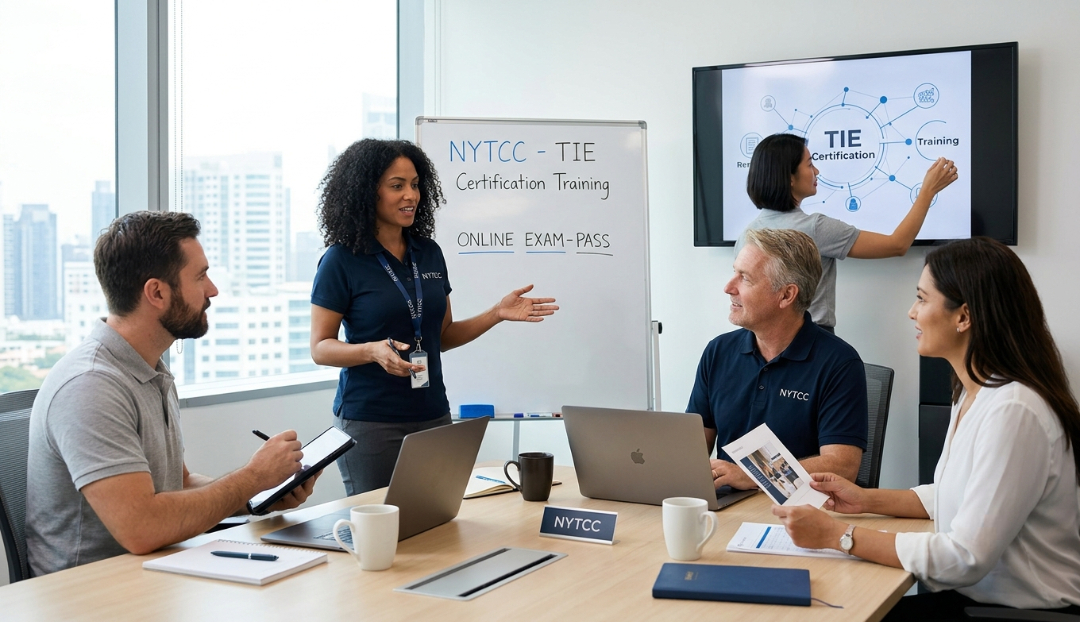
NYTCC provides online Cyber Threat Intelligence Training for students and professionals who want structured guidance instead of preparing alone.
Our training focuses on understanding the subject, covering the syllabus, and preparing confidently for the exam.
- Instructor-led explanations
- Flexible online sessions
- Beginner-friendly learning
- Complete syllabus coverage
- Practical examples and exercises
- Exam-focused revision
- Support with difficult topics
- Training accessible from different locations
You receive a clear preparation path covering intelligence sources, threat analysis, TIPs, threat hunting, information sharing, and incident response.
TIE Certification Exam Format
| Exam Detail | Information |
| Exam Name | Threat Intelligence Essentials |
| Exam Code | 112-57 |
| Number of Questions | 75 |
| Exam Duration | 2 hours |
| Question Type | Multiple-choice |
| Delivery | Proctored examination |
| Passing Score | Not published on the current official course page |
| Prerequisites | No previous cybersecurity knowledge or IT experience required |

TIE Certification Examination Cost
EC-Council currently displays the Threat Intelligence Essentials course package at USD $299.
The advertised package includes video training, eCourseware, labs, a capstone project, and a proctored exam voucher. Pricing, taxes, regional charges, and package features may change. Check the EC-Council website before purchasing.
NYTCC training fees may be separate from EC-Council’s course and examination charges.
Domains of TIE Certification
Knowledge weightage as per official certification standards.
| Exam Domain | Weight |
| Introduction to Threat Intelligence | 12% |
| Types of Threat Intelligence | 12% |
| Cyber Threat Landscape | 11% |
| Data Collection and Sources of Threat Intelligence | 12% |
| Threat Intelligence Platforms | 9% |
| Threat Intelligence Analysis | 9% |
| Threat Hunting and Detection | 9% |
| Threat Intelligence Sharing and Collaboration | 9% |
| Threat Intelligence in Incident Response | 9% |
| Future Trends and Continuous Learning | 8% |
Career Post TIE Certification
TIE develops foundational knowledge relevant to several cybersecurity roles. EC-Council identifies the following potential career paths:
- Threat Intelligence Analyst
- Security Operations Center Analyst
- Cybersecurity Analyst
- IT Risk Analyst
The course can also support system administrators, cloud administrators, engineers, architects, and incident-response professionals who work with security data or threat information.
TIE is a foundation-level credential. It does not guarantee a job, but it can help you build the knowledge needed for further study and entry-level cybersecurity development.
EC-Council suggests CCT, CEH, CND, and the more advanced CTIA program as possible next steps.

Average Salary
There is no salary attached specifically to TIE Certification. Pay depends on the job, experience, location, employer, and technical ability.
As of August 2026, ZipRecruiter reports an average US salary of approximately $100,058 per year for Threat Intelligence Analysts. Cyber Threat Intelligence Analysts average approximately $109,848 per year.
These figures represent job-market estimates, not guaranteed earnings for certification holders.

Frequently Asked Questions
What is TIE Certification?
TIE stands for Threat Intelligence Essentials. It is an EC-Council program covering threat data collection, intelligence analysis, threat hunting, intelligence platforms, information sharing, and incident response.
Is TIE suitable for beginners?
Yes. EC-Council states that no previous cybersecurity knowledge or IT work experience is required.
How many questions are in the TIE exam?
The exam contains 75 multiple-choice questions and lasts two hours.
How much does TIE Certification cost?
EC-Council currently advertises the course package for $299. Confirm the latest price and package details before purchasing.
Does the course include practical training?
Yes. The course includes five simulated lab activities and a CTF-based capstone project.
What jobs can I pursue after TIE?
TIE can support preparation for roles such as Threat Intelligence Analyst, SOC Analyst, Cybersecurity Analyst, and IT Risk Analyst. Additional experience and advanced training may still be required.
What should I study after TIE?
Possible next steps include EC-Council’s CCT, CEH, CND, and Certified Threat Intelligence Analyst programs.
Ready to TIE Certification?
Fill out the form below and our team will get back to you shortly.